Methodology

ORLI aims to contribute to a deeper understanding of how restorative listening situations can be orchestrated in transitional justice contexts, both institutional and non-institutional. In this framework, “orchestrating” refers to the careful conception, planning, and execution of listening situations through the coordination of logistical, human, and material resources, and especially through the preparation and accompaniment of participants who play central roles—often in public settings—in order to prevent further harm and minimize risks.

The project is organized around two main settings. The first consists of formal processes of truth-seeking and acknowledgment of responsibility within the framework of the JEP in Colombia. The second is an artistic context that combines sound archives produced by the JEP with documentary theatre techniques and choral singing, with the aim of expanding the dialogue on transitional justice and engaging Colombian diaspora communities abroad.
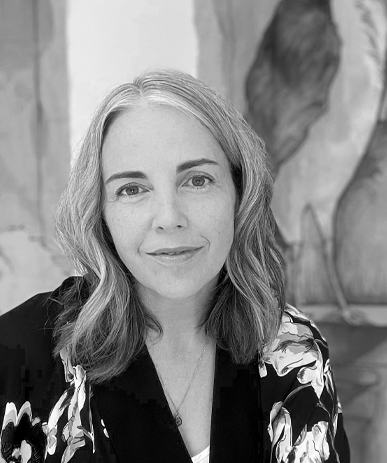
Cynthia Hammond

is Professor of Art History at Concordia University. She is an artist and scholar, whose research and creation emphasize living memories and situated knowledge of the city, especially women’s knowledge. Her most recent solo exhibition, ‘Les Jardins des femmes’, was held at the School of Architecture of McGill University in June 2019. This exhibition centred around St. Margaret’s Home (Montreal), which for almost a century was a home to older women. Cynthia is presently leading two federally-funded research grants: “La ville extraordinaire: Learning from older Montrealers’ urban knowledge through oral history research-creation” is a three-year Partnership Development Grant project that aims to learn about diverse older Montrealers’ spatial memories and urban knowledge. Core members Shauna Janssen and Eric Craven are co-applicants on this project, and many COHDS students are leading the interviews with different communities. The Centre des mémoires Montréalais.es will host an exhibition about this work in 2024. “The Spaces of Restorative and Transitional Justice” is a two-year Insight Development Grant that explores the ways in which design and spatial questions can support or hinder alternative justice activities. This project was inspired by core member, Luis Sotelo Castro’s own research on restorative and transitional justice. He is a co-applicant alongside McGill professor, Ipek Türeli. Through this project we have amassed 35 interviews and 50 case studies, which can be viewed here. Cynthia’s research can be accessed here, and her artistic work can be found here.

Nancy R. Tapias Torrado

She is a Colombian human rights lawyer and doctor in Sociology at Oxford. She worked for almost a decade with Amnesty International as a researcher on the Situation of Human Rights Defenders in the Americas.

Her research focuses on the impact of social movement organizations led by Indigenous women on the practice of corporate actors involved in mega-projects in the Americas.

Nancy received the Best Human Rights Dissertation Award from the International Studies Association (ISA) for her Ph.D. thesis: “Indigenous Women Leading the Defense of Human Rights from the Abuses by Mega-Projects in Latin America, in the Face of Extreme Violence” (2020).

Koby Rogers Hall

is an artist, writer and social practice facilitator dedicated to dialogical arts practices, archiving as cultural activism, and public interventions for political engagement. She has facilitated durational multi-stakeholder arts activist projects with the Immigrant Workers Centre in Montreal, the Politics & Care project, and the tactical media Living Archives with the collective PreOccupations. Her performance interventions have been seen in theatres, warehouses, artist-run centres, street demos, and outdoor landscapes across the Americas. She currently teaches in the departments of Theatre and School of Community and Public Affairs at Concordia.

Her PhD in Humanities supports her ongoing research-creation in migrant justice in social arts practices, with considerations for performance in conflict zones, critical curatorial strategies and trauma in social movements. Koby continues building on her multi-year relationships with im/migrant worker-led campaigns, arts activism and migrant justice organisers across the continent. She integrates this with her commitment to radical mothering, collective care practices, and community liberatory projects.

Megan KH Quigley

is a curator, arts administrator, and researcher working and learning as a guest in Tiohtià:ke/ Mooniyang/ Montreal. She is currently an MA student in the Art History department at Concordia University. Her thesis research asks how contemporary curatorial practices may participate in cross-community coalition building, through ecologically-oriented public art engagements. Megan’s curatorial research and practices are concerned with decolonial and queer methodologies, hospitality, critical geographies, diaspora studies, and land-based research approaches. She has previously held positions with Primary Colours/Couleurs primaires, Open Space, and Oxygen Art Centre. Megan has also worked extensively in the community sector, primarily in anti-violence education, migrant justice, and youth support.

Léa Denieul Pinsky

is a PhD candidate in the geography department at Concordia University. After completing a masters in Cultural Geography at Wageningen Research Institute in the Netherlands, she became fascinated by the power of maps as storytelling devices. Her Ph.D. research aims to create meaningful ways of mapping the diverse aspects of state-sponsored colonial and ecclesiastical archives, ultimately enhancing their relevance for Indigenous perspectives. As member of allied workforce in Kanehsatà:ke since 2020, she assists community members in any project they feel are important ranging from organizing protests, liaising with settlers, and making maps.

Luis C. Sotelo Castro

is Associate Professor in the Department of Theatre at Concordia University, Montreal (Quebec, Canada). He is also the director of Concordia’s Acts of Listening Lab (ALLab). The ALLab is a hub for research-creaiton on the transformative power of listening in the context of oral history performance. His latest publications explore listening in the context of post-conflict performances of memory. For instance, see Luis Carlos Sotelo-Castro & Toni Shapiro-Phim (2023) Listening, as common ground: oral history performance for transitional justice, Research in Drama Education: The
Journal of Applied Theatre and Performance, 28:1, 1-1

Seluna Fernandez

As a woman designer, I am constantly wondering how my creations are shaped by the cultural values of the society to which I belong. I define myself as feminist, as a person that cares about human and other beings. As designer, I want my work to both convey my own values and challenge some common assumptions regarding gender. I believe that design may be employed to bring social changes, and for this reason, my creations are a reflection of my values: equality, respect of nature, and community engagement.