Author of case study: Marcela Torres Molano
Geopolitical location of space:
19 Dimboola Rd
Broadmeadows, Victoria
Australia
Extant? Yes
Timeframe of RJ/TJ process in this space:
In use as a museum since 2002.
Background information:
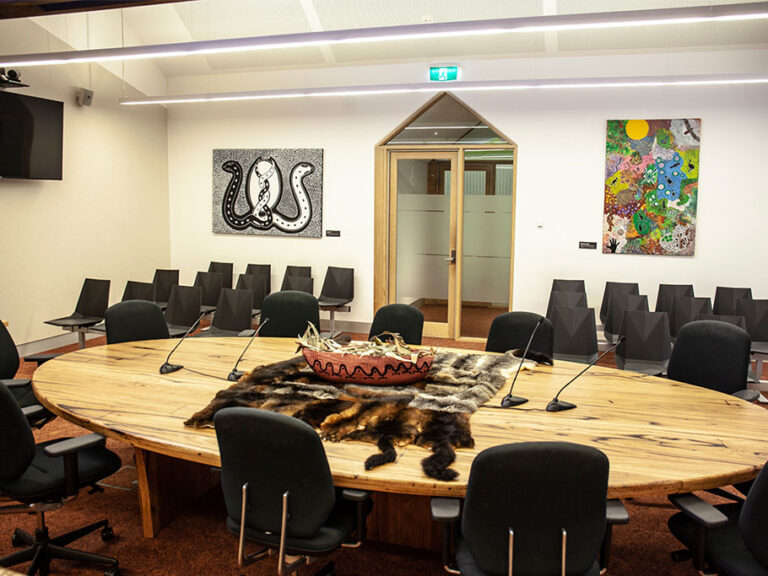
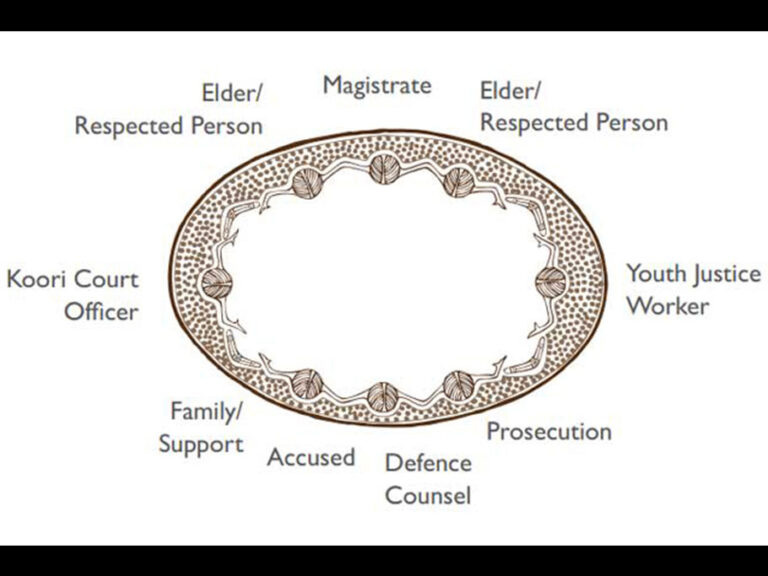
The Broadmeadows Koori Court follows the Victorian Koori County model (alternative Indigenous justice practice). In a Koori Court everyone sits around an oval table to encourage direct communication. The Elders and Respected Persons have their say. This is done to create a less threatening environment.
Is restorative and/or transitional justice actually taking place in this space?
The Koori Indigenous model is used in this space. It is one of Australia’s alternative justice systems for Indigenous people. It is considered to be under the Restorative Justice concept. Reparation of harm and more active involvement of victims in the process are among their goals.
The Broadmeadows Koori Court is part of an alternative justice system for Koori people. The Koori system was set up because of the large numbers of Koori people in the criminal justice system. The aim is to create a more culturally appropriate justice process that involves Elders and other Respected Persons from the community.
Is this space designed/arranged for safe listening?
Yes, the arrangement of the space is designed for safe listening, a more informal and less threatening environment.
Who is the audience/the intended participants for this space?
Two type of audiences:
1. The Children’s Koori Court is for young offenders who:
- are Aboriginal and/or Torres Strait Islander
- want to have their case heard in the Koori Court
- are not to be charged with a sex offence
- plead guilty or have been found guilty of their offence
2. Broadmeadows Koori Court is for adults offenders who:
- are Aboriginal or Torres Strait Islander descent
- plead guilty
- consent to having the case heard in the Koori Court
How or to what extent is this space public?
Broadmeadows Koori Court is a public court of the Victoria State.
Physical/factual description of space:
1. Children’s Koori Court:
Architect: Ireland Brown Constructions (IBC)
Client: Department of Justice, Victoria
Area: approximately 1400m2 (two levels)
Completed: 2015
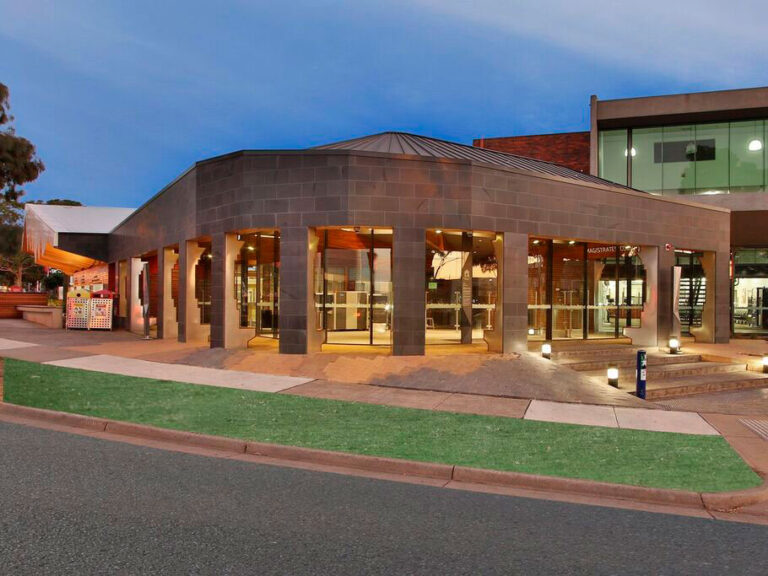
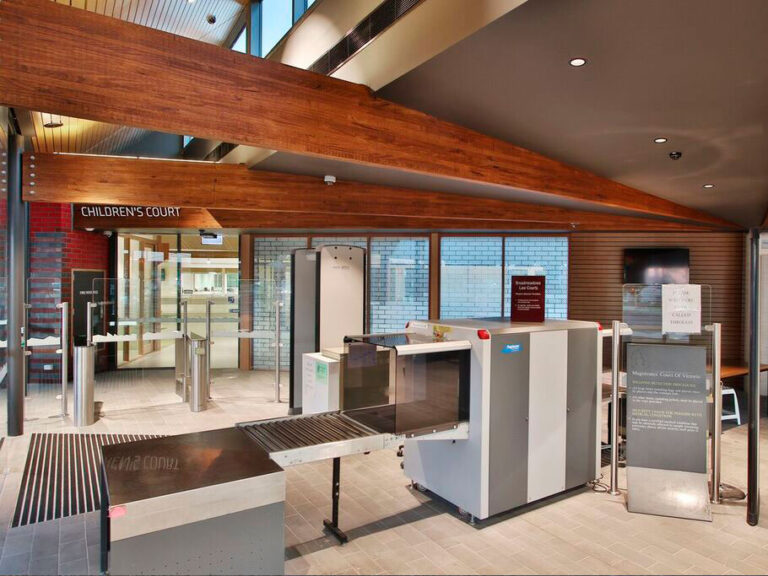
The new Children’s Koori Court was an extension of the main Magistrates court building. It involved the construction of an adjacent new court house with 2 courtrooms, meeting rooms, office space, and a new combined entry foyer for the Magistrates and Children’s Court.
The design included:
- 2 courtrooms specifically designed for child protection cases
- meeting and interview spaces
- the Cubby House: child-focused waiting room
- public waiting areas with a sense of privacy and security
- outdoor children’s area and a separate quiet outdoor space for adults
The building included glazed brickwork, bluestone paving and cladding, polished precast panels, glazing and timber paneling.
2. Adults Koori Court in Broadmeadows:
“Remodelled courtroom with an oval table, 3 flags (Australian, Aboriginal and Torres Strait Islander), Indigenous paintings and noticeboard” (Australian Institute of Criminology, 2004).
The Koori Court is a culturally appropriate, sensitive space for Koori justice. The room includes Aboriginal art elements on the walls and the table. One of the main elements for Koori justice procedures is having an oval bar table at the centre of the space that allows direct communication and the “circle sentencing” method.
For this specific space, a special table was constructed in 2018, using recycled yellow stringybark, and a boomerang shape featured in its centre.The Koori courtroom follows the Nunga Court model — oval table, Aboriginal and Torres Strait Islander art and symbols, one or two Elders accompanying the Magistrate — rather than the Circle Court model, which is usually held in a venue of cultural significance, and usually involving victims (Youth Koori Court Review, 2005).
Family, friends and service providers who know the young person, researchers, journalists, Department of Justice staff, and other observers might sit at the back of the courtroom. These seats might also be occupied by prison escorts for people who are in custody (Youth Koori Court Review, 2005).
Analytical description of space:
Male offenders account for around three quarters of all the accused (77%).
The stakeholders involved in this alternative justice system are:
- Elders and Respected Persons
- County Koori Court Officer
- County Koori Court Program Manager
- Service Providers
- Comunidad
- Others
Koori courtrooms are working for inclusion and access for Aboriginal community court processes. The Koori system first began in 2002, in the Victorian Magistrates Court. It was developed in consultation with Aboriginal communities as a response to the first Royal Commission into Aboriginal deaths in custody.
These courts ensure offenders are sentenced in more culturally appropriate spaces, and allow them to discuss the underlying issues that contributed to their behaviour. “The courts allow offenders to have a say, better engage with the process and reduce those feelings of alienation and intimidation experienced by many Koori offenders, especially young people” (Geelong Advertiser, 2016).
Aboriginal Elders and Respected Persons play a prominent role in the court process, providing cultural advice to the Magistrate. The Magistrate still sentences the offender in accordance with the same requirements that apply in mainstream courts. The Koori courts in Victoria state employ 80 Elders and Respected Persons, and 16 full-time and part-time staff.
The Youth Koori Court space:
The Children’s Koori Court is a section of the Children’s Court for young Aboriginal people who have been charged with a criminal offence and must be willing to go to court and talk openly about their behaviour. The person must not be charged with a sexual offence. The Children’s Koori Court is based on the principles of respect and responsibility.
The Koori courtroom is rearranged for Youth Koori Court meetings with all participants seated around the oval table. Paintings on permanent loan to the Youth Koori Court by young Aboriginal and Torres Strait Island artists are hung on the walls. These are set up and de-installed by court officers or the Aboriginal Liaison Officer.
“At the start of a session, the police prosecutor, the young person, the young person’s legal supports, their family and/or community supports, and service providers wait around the oval table. Youth Koori Court is called into order and the participants all stand as the Magistrate and the Youth Koori Court Elders walk in and cross the courtroom to stand behind their own chairs at the bar table. The participants bow and they all take their seats” (Children’s Court of Victoria).
Bibliographic references:
- “Case Study: Broadmeadows Koori Court.” Deadly Story, https://www.deadlystory.com/page/tools/Legal/The_Children_s_Koori_Court/Case_Study_Broadmeadows_Koori_Court. Accessed 28 Oct. 2020.
- “The Children’s Koori Court.” Deadly Story, https://www.deadlystory.com/page/tools/Legal/The_Children_s_Koori_Court. Accessed 28 Oct. 2020.
- Dawkins, Zoë, et al. “County Koori Court: Final Evaluation Report.” County Court of Victoria and the Victorian Department of Justice (Melbourne), 27 Sep. 2011, https://www.countycourt.vic.gov.au/files/documents/2018-08/ckc-evaluation-reportfinal27sep110.pdf. Accessed 28 Oct. 2020.
- “New Adult and Children’s Koori Court to Begin Sitting in Geelong.” Geelong Advertiser, 2 Apr. 2016, https://www.geelongadvertiser.com.au/news/crime-court/new-adult-and-childrens-koori-court-to-begin-sitting-in-geelong/news-story/34b5e26025e04e22d6e55563e1cd5148. Accessed 28 Oct. 2020.
- “Broadmeadows Children’s Court Project.” Ireland Brown Constructions, http://ibconstructions.com.au/portfolio/broadmeadows-childrens-court-project/. Accessed 28 Oct. 2020.
- “Koori Court.” Children’s Court of Victoria, https://www.childrenscourt.vic.gov.au/jurisdictions/koori-court. Accessed 28 Oct. 2020.
- “Koori Court.” Magistrates Court of Victoria, 2020, https://www.mcv.vic.gov.au/about/koori-court. Accessed 28 Oct. 2020.
- Marchetti, Elena, and Kathleen Daly. “Indigenous courts and justice practices in Australia.” Australian Institute of Criminology, 1 May 2004, https://www.aic.gov.au/publications/tandi/tandi277. Accessed 21 Jan. 2021.
- Williams, Melissa, et al. “Youth Koori Court: Review of Parramatta Pilot Project.” Western University Aboriginal and Torres Strait Islander Employment and Engagement Advisory Board, 7 May 2018, https://www.westernsydney.edu.au/__data/assets/pdf_file/0008/1394918/YKC_review_Oct_24_v2.pdf. Accessed 28 Oct. 2020.
Image references:
- 1. “Koori Court, exterior” Ireland Brown Constructions, http://ibconstructions.com.au/portfolio/broadmeadows-childrens-court-project/. Accessed 28 Oct. 2020.
- 2. “Koori Court, entrance interior.” Ireland Brown Constructions, http://ibconstructions.com.au/portfolio/broadmeadows-childrens-court-project/. Accessed 28 Oct. 2020.
- 3. “Koori Courtroom, roundtable.” Yard Furniture, 20 Dec. 2018, https://www.yardfurniture.com.au/2018-wrap-up/. Accessed 28 Oct. 2020.
- 4. “Koori Courtroom, roundtable explanation.” Deadly Story, https://www.deadlystory.com/page/tools/Legal/The_Children_s_Koori_Court/How_does_the_Koori_Court_operate. Accessed 28 Oct. 2020.