INTERVIEWS
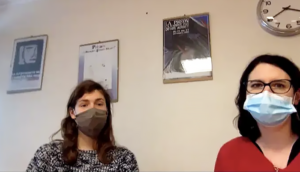
Alisa del Tufo
Interviewer: Greg Labrosse
Language of interview: English
Country of practice: United States
Profession: Teaches restorative justice part-time at Bennington College (Vermont). She has a small not-for-profit organization called Threshold Collaborative.
Alisa Del Tufo is a restorative Justice practitioner, part-time professor at the University of Bennington-Vermont, and founder of “Threshold Collaborative”, a project of participatory restorative practices. She has extensive experience in restorative processes with victims of domestic violence, in which she has adopted narrative-based actions at the individual and community levels, focusing on oral histories collection for nurturing connection among participants. She is currently writing a book on restorative justice and participatory action research, for a Little Book series.
During our conversation, Del Tufo talks about two main focuses of her work: individual actions that are developed through restorative narratives with survivors of domestic abuse, and collective processes with communities, to which she provides training and tools for prevention. When referring to the topic of physical spaces for restorative justice, Del Tufo explains that it is essential to begin by asking participants if there is a place where they feel safe, in control of the situation, and where they can speak without fear or intimidation. This is of particular importance to her because, as she states, restorative actions happen in places of their daily lives, such as homes, churches, or community spaces.
In addition, she talks about some of her experiences occupying alternative spaces, such as trailers, or mobile structures made out of cardboard to collect narratives in diverse and remote territories. Among the difficulties of her work, she highlights the technical complications regarding sound and recordings, the difficulty of dealing with the emotions and pain of the participants, and the common misinformation about the meaning of restorative justice. Further, she explains it is important to collaborate with official institutions, and work to reduce the usual communication gap existent between participants and authorities. For del Tufo, it is vital to build restorative processes from the local level to promote sustainable social change.
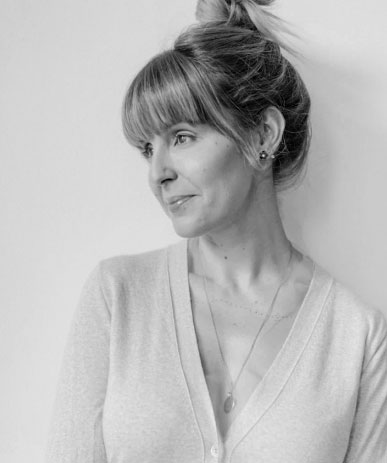
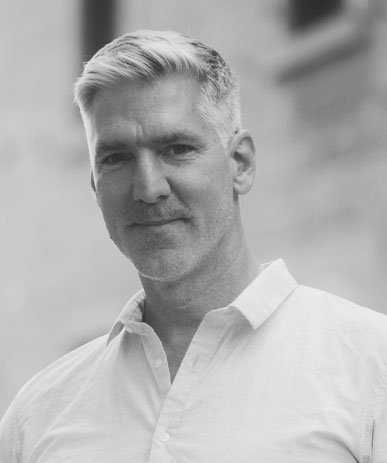
is an author, speaker, columnist, and podcaster in the fields of architecture and decorative arts. She is completing her MA in Art History at Concordia University, Montréal, and holds a Bachelor of Commerce with a major in Marketing from John Molson School of Business. She studied Industrial Psychology in Los Angeles, California. Sicotte is the author of two published books on design (2015, 2018) published by Les Éditions Cardinal.
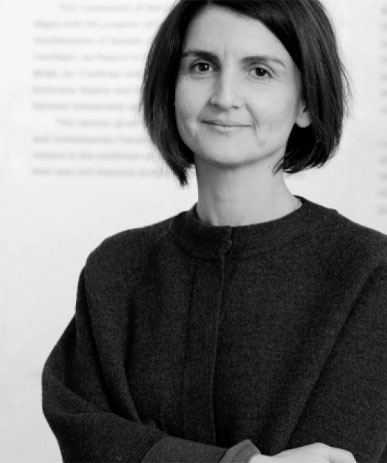
is a Colombian PhD candidate in the Department of Art History at Concordia University. She has a background in architectural design and community activism and holds a master’s degree in Building and Urban Design from the Bartlett School of Architecture in London, England. Her interests focus on socially-engaged art, social movements, collaborative activism in post-conflict scenarios, collectively-produced art, and art produced in relation to the built environment.
is a PhD candidate in Humanities at Concordia University. His research focuses on spatial agency, social aesthetics, youth narratives, and graphic representations of urban memory. He has published on the relationship between children, play, and public space in Cartagena, Colombia. He has also worked as an editor on literary projects, including Territorio Fértil, which received the María Nelly Murillo Hinestroza award for Afro-Colombian literature.
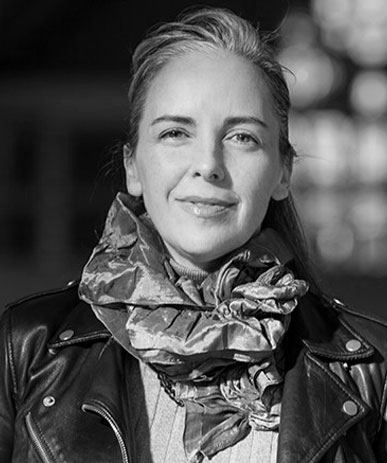
is Associate Professor and Canada Research Chair in Architectures of Spatial Justice (Tier 2) at the Peter Guo-hua Fu School of Architecture at McGill University, Montréal, Québec, Canada. Her research interests include low-income housing and participatory design, civil protest and urban design, and campus landscapes and race. Her publications include the co-edited book, Orienting Istanbul (2010) and solo-authored book, Istanbul Open City (2018).
is an artist and a professor of Art History at Concordia University. Her work focuses on women and the history of the built environment, urban landscapes, research-creation, and oral history. She has published on the spatial history of the suffrage movement, public art, gardens, and the politics of urban change. In addition to her research on the spaces of restorative and transitional justice, she is leading an oral history project on the urban memories of diverse Montrealers.
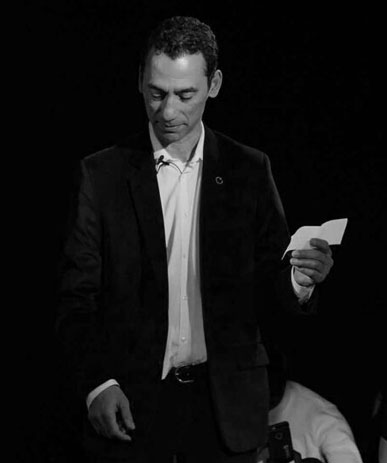
is Associate Professor in the Department of Theatre at Concordia University, Montreal (Quebec, Canada). He is also the second co-director of Concordia’s Centre for Oral History and Digital Storytelling. His latest publications explore listening in the context of post-conflict performances of memory. For instance, see ‘Facilitating voicing and listening in the context of post-conflict performances of memory. The Colombian scenario.’ In: De Nardi, S., Orange, H., et al. Routledge Handbook of Memoryscapes. Routledge: London. (2019), and his article ‘Not being able to speak is torture: performing listening to painful narratives’. International Journal of Transitional Justice, Special Issue Creative Approaches to Transitional Justice: Contributions of Arts and Culture. (March, 2020)