Author of case study: Marcela Torres Molano
Geopolitical location of space:
Piendamó, Cauca (Indigenous reservation)
Extant? Yes
Timeframe TJ process in this space:
Territory: 1999
Ancestral status and first encounter with perpetrators: 2012
End date: ongoing
Background information:
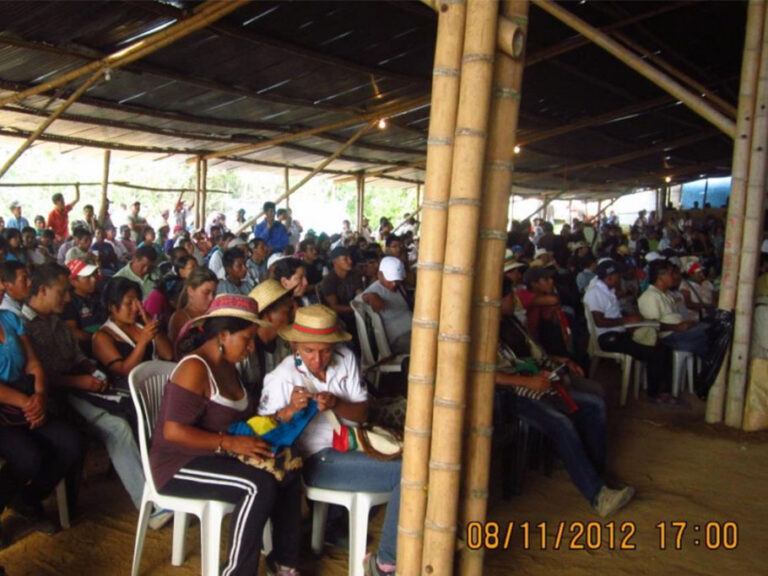
This is a space of encounter of different Indigenous groups that wanted to launch an alternative proposal for the Colombian peace process in order to include the needs and rights of minority groups. Because Indigenous people do not feel represented by the official transitional justice process, they have created La María, a territory of peace, coexistence and dialogue, where they are able to integrate traditional rituals and spirituality as vital elements for the peace process.
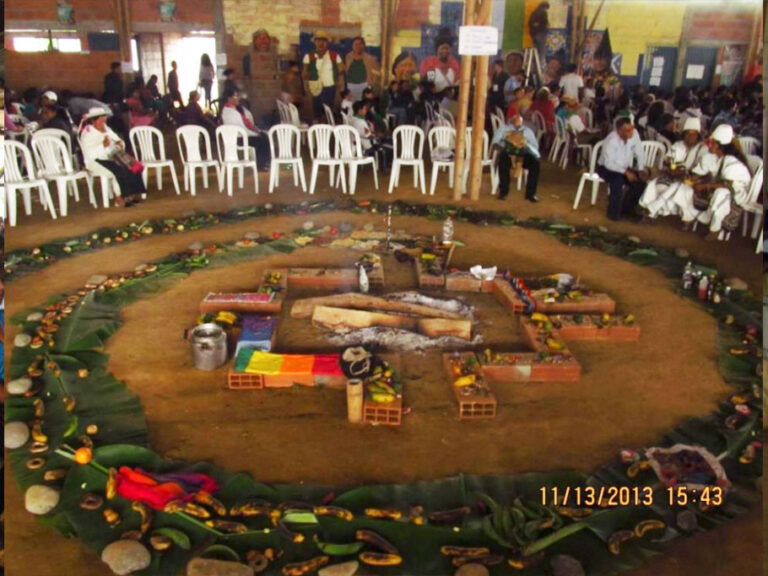
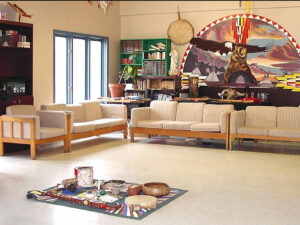
In this territory, Indigenous guards and the T’ewalas (traditional medicine keepers) gather around a fire and a stove (symbolic elements of life) to manifest how peace has been a core value of the modes of life of all Indigenous groups of Colombia. They created their own encounter space in opposition to the official peace process.
Is restorative and/or transitional justice actually taking place in this space?
This was not an official transitional justice process, but it was an encounter of an alternative form of justice called the Indigenous Special Justice (Justicia Especial Indígena). The purpose of this meeting was to initiate a culturally appropriate process that uses restorative actions and traditional knowledge as part of the peace building process. During the encounter, Indigenous people highlighted how the external dialogue between the national government and the guerrilla was not a holistic approach to conflict resolution. They argued that long lasting peace needs to be constructed on the basis of strong ties and modes of life that include everyday activities and restorative approaches.
This encounter was the first step of the Indigenous Special Justice approach. Because Indigenous people have the right to manifest and construct peace in their own terms, as well as to be acknowledged as an important part of the social fabric, they have decided to create their own restorative approach to the peace building process. For Indigenous people based in the Colombian territory, peace is a fundamental right that should be evidenced in daily life. As Indigenous people in Colombia have suffered from violence for centuries, it was crucial for them to be the ones facilitating dialogues and restorative actions for their own communities. Indigenous people have chosen not to delegate their agency to any institution or non-Indigenous individual.
Is this space designed/arranged for safe listening?
Yes, they occupied ancestral territory (in a reservation area) that has both symbolic and physical importance for Indigenous people. This territory has an important connection to land, nature and life. They used fire and other symbolic elements and rituals that represent their modes of life.
Who is the audience/the intended participants for this space?
Indigenous communities; Indigenous survivors; offenders, and government officials.
La María is a space of encounter conceived in opposition to the limitations of institutional approaches. Indigenous people support the official peace dialogues and the Peace Accord, but do not adhere to the official process.
How or to what extent is this space public?
This is a reservation territory of the Misak Indigenous people. It is an ancestral land that belongs to their communities.
Physical/factual description of space:
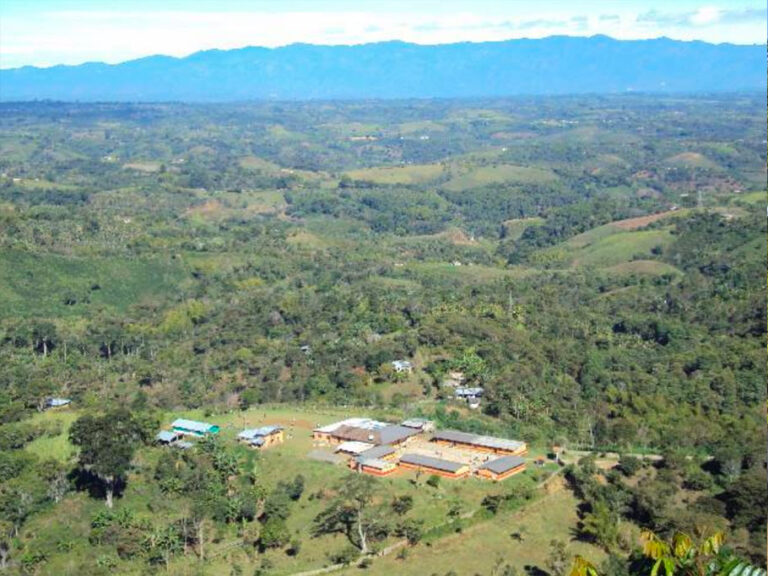
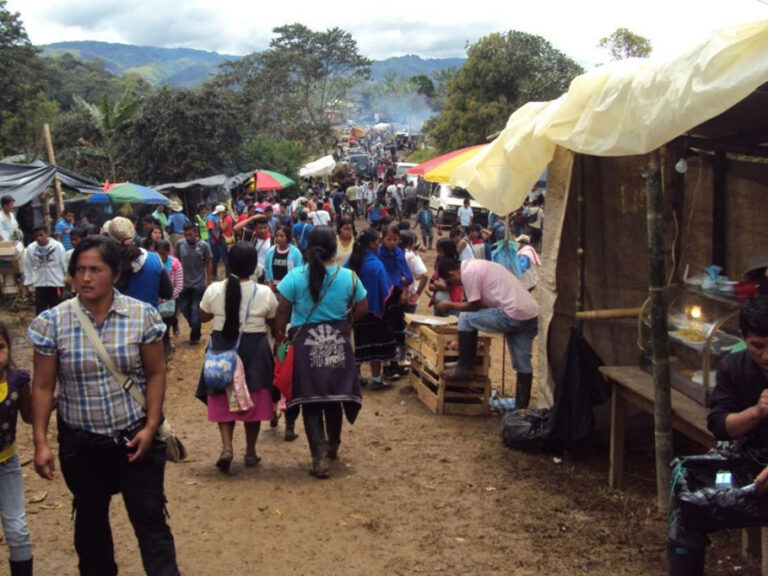
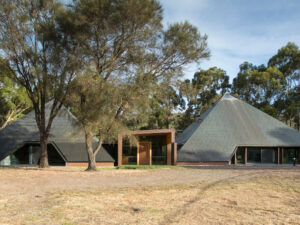
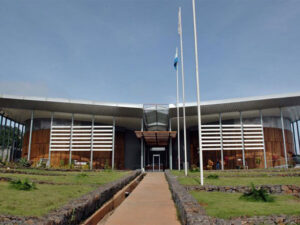
La María reservation is located in the middle of the department of Cauca, next to the Pan American Highway, which connects the countries of the continental Americas. La María covers over 30 hectares of rural land of the Pubenza Valley. It is located 1600 meters above sea level, with an average temperature of 22º Celsius all year long. La María is home to many Indigenous demonstrations, social encounters, and negotiations with Colombian government. It does not have any churches or police stations.
Analytical description of space:
Since 2002, Indigenous people of Cauca have negotiated with Colombian presidents in the La María reservation. In 2012, one of the encounters included the last Farc guerrilla group and representatives of the national government. As a result, the land was declared an ancestral territory of peace, coexistence and dialogue. Since then, La María has become an Indigenous-owned space for conflict resolution. It is one of the spaces where Indigenous political, social and cultural dynamics of resistance are promoted and implemented. It has become a symbol of resistance for Indigenous people across America (Mueses, 2012).
The peace dialogues and encounters in la María have also included Afro-Colombian populations, campesinos (rural land workers), and other minorities. It has been the scenario to maintain the independent peace agenda of Indigenous people, which includes the respect of traditional knowledge and other worldviews. Indigenous people have organised multiple humanitarian encounters with offenders in parallel to the Havana dialogues. In La María, Indigenous communities have called for the reparation of victims and the non-repetition of violent acts.