This project is named after Leticia, a rural Colombian woman born in the 1920s—a time when women, especially in rural areas, had very limited access to formal education. Leticia never learned to read aloud and lived within an oral culture, where reading and writing played little role in her daily life. Instead, she cultivated deeper, perhaps more essential skills: listening and memory.
Leticia never married or had children of her own, but all her nephews and nieces became her children. She was always present for us—ready to listen, to help us remember where we had left our things, and to support us in ways that truly mattered.
I hope that in every family and community, there is someone like my aunt Leticia: a person who performs acts of listening that help us remember what is important and navigate our most vital concerns. Through this project, I wish to foster appreciation for selfless, non-judgmental listening as a powerful tool for conflict transformation.
— Luis C. Sotelo Castro
The Acts of Listening Lab is a hub for research-creation on the transformative power of listening in the context of oral history performance. It brings together artists- researchers, communities, and activists from across disciplines and cultures interested in exploring alternative and creative ways of making lifestories matter in the public sphere. It is part of Concordia University’s Centre for Oral History and Digital Storytelling. It was created in 2018 by Associate Professor Luis Carlos Sotelo Castro with support from a Canada Foundation of Innovation research-infrastructure Grant. This website is supported by the same grant.

We are an interdisciplinary team of researchers, artists and designers.
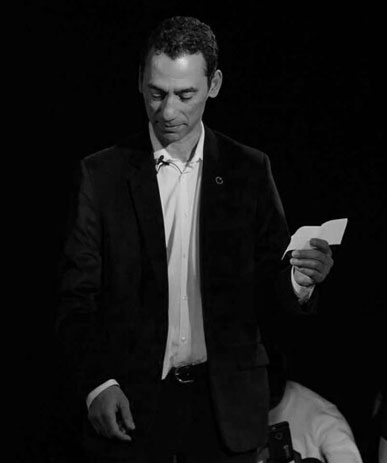
is Associate Professor in the Department of Theatre at Concordia University, Montreal (Quebec, Canada). He is also the second co-director of Concordia’s Centre for Oral History and Digital Storytelling. His latest publications explore listening in the context of post-conflict performances of memory. For instance, see ‘Facilitating voicing and listening in the context of post-conflict performances of memory. The Colombian scenario.’ In: De Nardi, S., Orange, H., et al. Routledge Handbook of Memoryscapes. Routledge: London. (2019), and his article ‘Not being able to speak is torture: performing listening to painful narratives’. International Journal of Transitional Justice, Special Issue Creative Approaches to Transitional Justice: Contributions of Arts and Culture. (March, 2020)
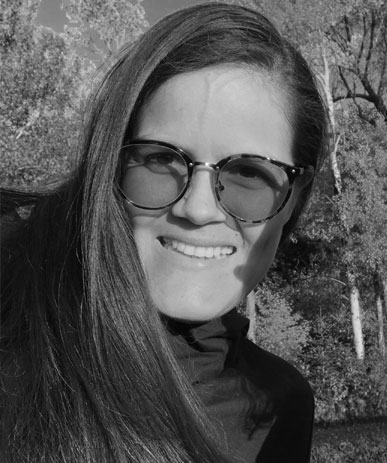
is an artist and a Humanities PhD student at Concordia University. She is the co-founder of the digital projects Oropéndola, arte y conflicto (now part of the Museum of Memory of Colombia) and Mirlo Podcast. Manuela was co-curator for the exhibit Feliza Bursztyn, Elogio de la chatarra at the Museo Nacional de Colombia and producer for BBC Radio’s Apichatpong Weerasethakul (In the studio). Her research explores the participatory potential of oral history and artistic methods in the Colombian post-conflict scenario so that the listening experience is not passive and unilateral but rather transformative and empowering.
Bachelor’s degree, Fine Arts in Design and Art History from Concordia University. My main interest lie in designing for print and web. I am passionate about telling stories with the images I capture. As a woman designer, I’m constantly wondering how my creations are shaped by the cultural values of the society to which I belong. I define myself as feminist, as a person that cares about human and others beings. As designer, I want my work to both convey my own values and challenge some common assumptions regarding gender. I believe that design may be employed to bring about societal changes, and for this reason my creations are a reflection of my values: equality, respect of nature, and community engagement.