Author of case study: Marcela Torres Molano
Geopolitical location of space:
Cra. 19b #24 – 86
Bogotá, Cundinamarca
Extant? Yes
Architect:
Juan Pablo Ortiz Architects
Date of construction:
2008-2012
Architect:
Not specified
Timeframe of RJ/TJ process in this space:
Start date: 2012
End date: ongoing
Background information:
In Colombia, transitional justice is understood as a set of mechanisms, both judicial and extra-judicial, that guarantee the rights of the victims of the internal armed conflict. These mechanisms were incorporated into the countries constitution in 2017 and is officially referred to as the Integrated System for Truth, Justice, Reparation and Non-Repetition (Sistema Integral de Verdad, Justicia, Reparación Y No Repetición. This integrated system is composed of three institutions:
– Peace Tribunal (Justicia Especial para la Paz)
– Truth Comission (Comisión de la Verdad)
– Search Unit for Disappeared People (Unidad de Búsqueda de Personas Desaparecidas)
Is restorative justice actually taking place in this space?
No, but it has the potential to become a site for these practices.
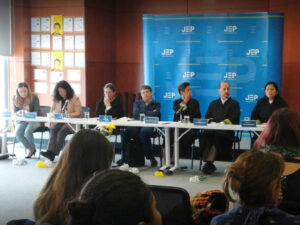
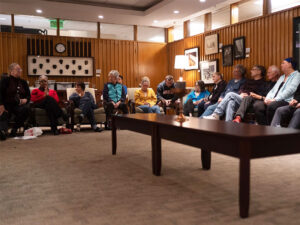
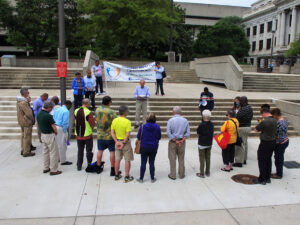
Some public encounters between victims, civil society and Ex-Guerrilla members have happened in this space. In March 2018, The Center of Memory in Bogota was the space where women victims and ex-guerilla members held an emotional meeting to share life experiences during the war. The victims agreed that their role was not an obstacle to agree on the need to rebuild the social fabric, seeking to transform the past into opportunities for the future.
Is this space designed/arranged for safe listening?
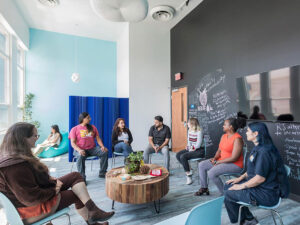
Yes, it has private rooms for attention to victims of the conflict.
Who is the audience/the intended participants for this space?
Conflict victims and civil society in general.
How or to what extent is this space public?
It is a public building and has public spaces but they have a visiting schedule from 8 am to 5 pm. Monday and Sunday closed.
What are the politics of this space, either in terms of its location, design, spatial, or visual aspects?
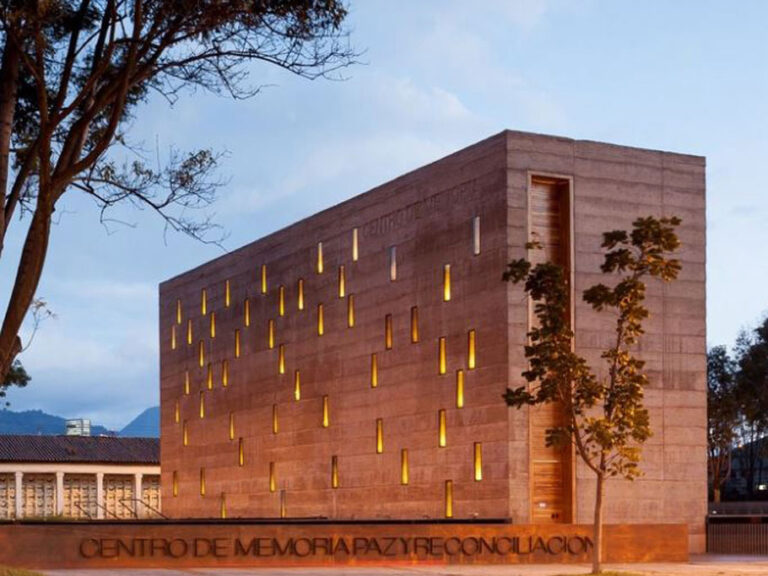
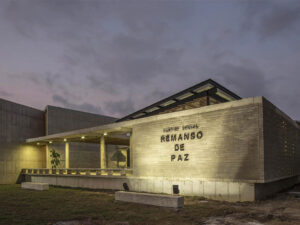
It is an important space for documentation of conflict and generation of collective memory. The center states the importance of Social memory as a transitional justice tool. As a result of a public contest of architecture, the project of Juan Pablo Ortiz architects, established a meaningful and emotional relation with the victims, as part of the initial stage of the construction process. From the beginning of the project, a deep respect for the memory and unique conditions of the place were established as a priority. For this reason, the construction of the Center started with a series of community activities that included the participation of more than two thousand people.
Different collectives that represented the affected populations of the Colombian internal conflict were called to perform ten symbolic actions. A total of 2600 individuals gathered on the site to share their stories and to make personal contributions of soil brought from their hometowns. These contributions were storage in glass pipes that are now a visible and integral part of the building.
Physical/factual description of space:
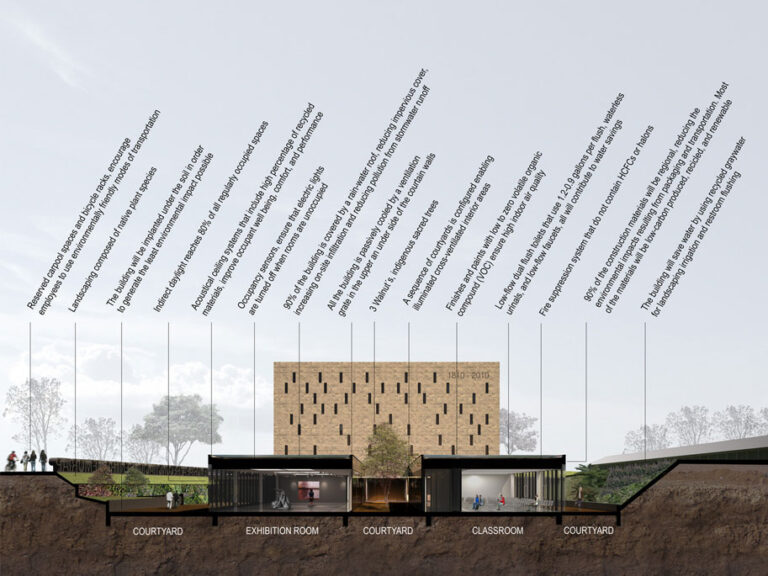
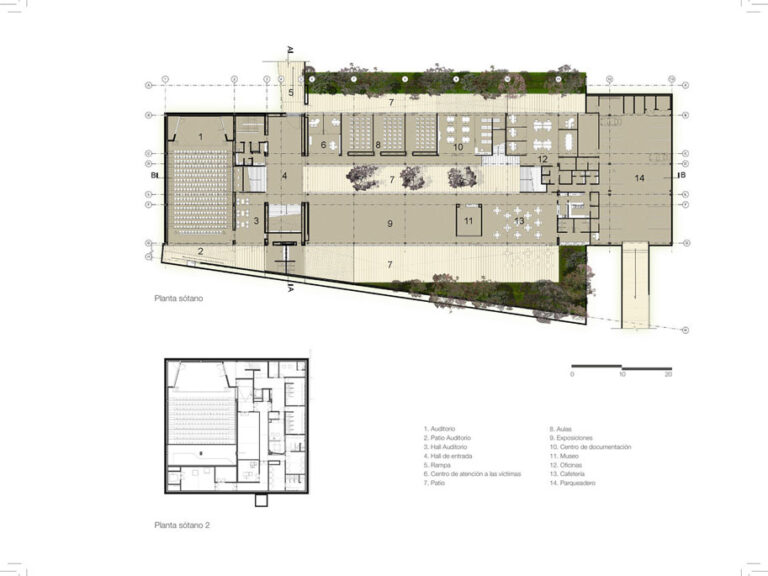
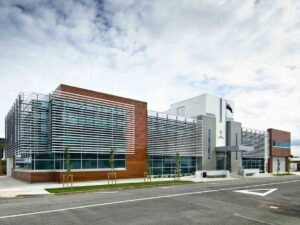
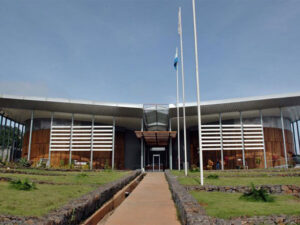
The Center of memory is a building composed of two joined structures: a monolithic volumen made out of 200 layers of soil that represent the 200 years of independence of Colombia, and an underground section that balances the relations with the natural, urban and social surroundings. The project was intentionally built with a formal simplicity to obtain space flexibility and an easy change of use in the future.
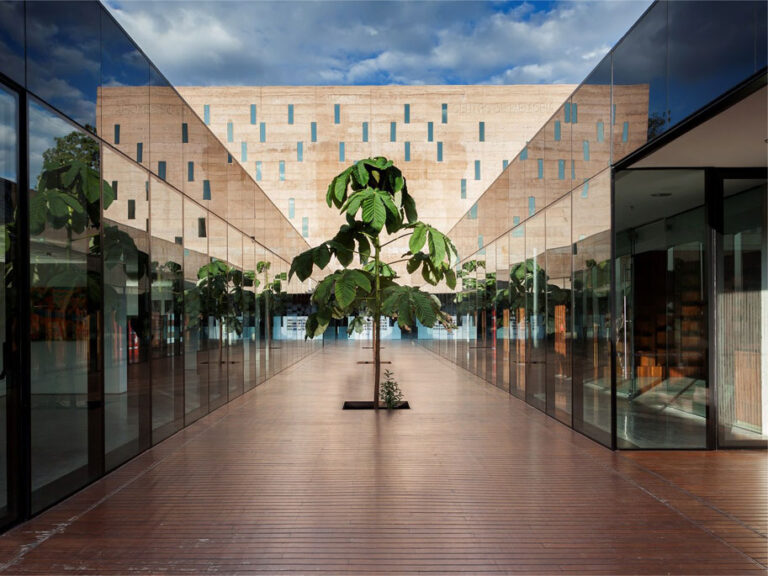
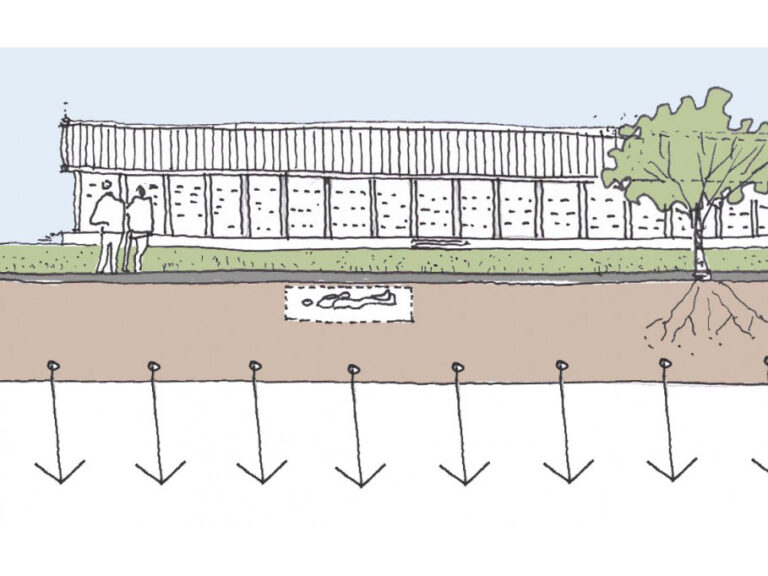
Sustainability was a key aspect of the building design. The architects worked to generate a low impact construction that respected the surrounding historic sites. More than 70% of the building is implanted under the soil to generate the least environmental and landscape impact. The underground section includes a sequence of courtyards that enable illuminated cross-ventilated interior areas. The project is located at the grounds of a mass grave, next to the central cemetery of the city and a metropolitan park. The building honours the lives of the individuals resting in the site, and therefore looks for a deep connection with the land.
“An architecture that respects the cemetery, with silent and timeless features, with a subtle recognition throughout the park landscape is proposed” (Ortiz, 2018). The building was constructed with local, solid and long-lasting materials. A research on vernacular techniques of construction was conducted to find the appropriate matter. As limitations of construction techniques with 100% organic materials were found, the structure was built using 90% of inorganic soil and 10% of cement, in order to meet the seismic resistance rules of the city.
The building is located in one of the most deprived areas of Bogota, between el Samper and el Santa Fe neighbourhoods, near the city center. It is easily reachable by public transportation, and it became an urban connector, distributing pedestrian traffic from the park, the avenue and its surroundings. The construction of the project was completely financed by the Mayor’s Office and the Local Council. It is property of the Secretary of Government of the city that guarantees the site operation. The center has been open for ten years.
Analytical description of space:
The Center of Memory was built to create a space where memory and conflict victims were dignified. It was originally an idea of human right defenders to serve as a site that supported the culture of peace during the internal conflict. It opened its doors in December 2012, as part of the program Bogota City of Memory of the High Council for the Rights of Victims, Peace and Reconciliation. Since then, it has become a space that welcomes diversity and provides an opportunity for changing the meaning of Colombian violent history.
The center commemorates the victims of the conflict and upholds the values of peace, truth, justice and reconciliation, by offering spaces for attention and assistance to visitors. It has available spaces for teaching, community meetings, divulgation services and peace campaigns, related to the internal conflict. The mission of the Center is to provide a space for the reconciliation and transformation of collective imaginaries related to the internal conflict. Moreover, it contributes to a peace building process while making visible the different experiences of victims. The center promotes exhibitions, art performances, and collaborative initiatives that generate the creation and construction of collective memory and reconciliation.