Geopolitical location of space:
851, rue De Puyjalon
Baie-Comeau, QC G5C 1N3
Extant? Yes
Architect:
Original architect unknown
Timeframe RJ/TJ process in this space:
Equijustice is a network offering restorative justice and community mediation through its 23 offices across Québec. According to the organization’s website, ÉquiJustice was created in 1989 under the name ROJAQ (Regroupement des organismes de justice alternative du Québec). In 2018, the non-profit organization adopted the name ÉquiJustice, making it easier for citizens to identify available services in their respective regions. Its mission is to develop justice that is equitable and accessible to all, encouraging people to get involved in managing the difficulties they may experience within the community by offering support to ensure that their rights and differences are respected.
Background information:
The ÉquiJustice Haute Côte Nord office is located in Baie-Comeau (pop 28 000 approx.). Located on the north shore of the St Lawrence River, at the mouth of the Rivière Manicouagan, Baie-Comeau is 422 km northeast of Québec City. At the start of the 20th century, the area was still a huge hunting and fishing land of the Montagnais-Naskapi.
Is restorative justice actually taking place in this space?
Yes. Offenders meet here with mediators and survivors.
Is this space designed/arranged for safe listening?
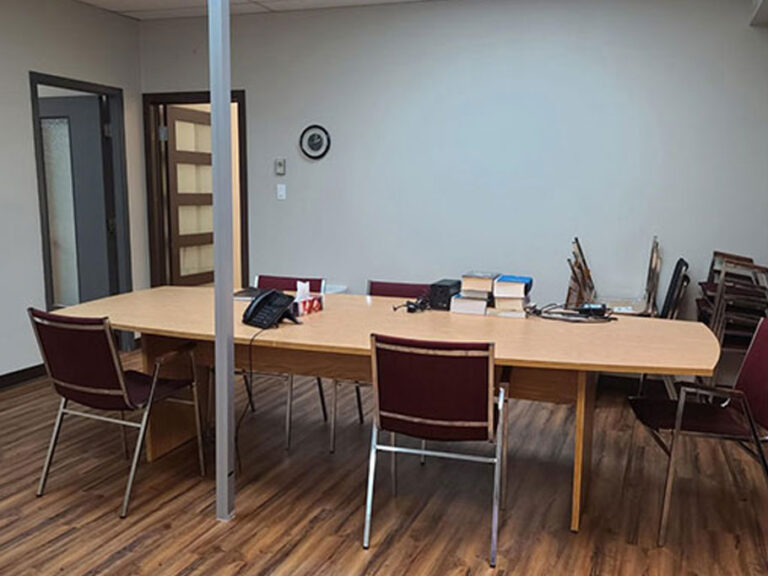
The space is arranged for safe listening in that the table offers a view of all participants without being “too close for comfort.” The table provides a visible barrier between the offenders and survivors in a way that has been deemed reassuring by some of the participants. The frosted glass windows hinder somewhat the privacy offered by the otherwise windowless room.
Who is the audience/the intended participants for this space?
The ÉquiJustice office offers services to three different segments of the community:
- Adults, survivors and offenders in the General Alternative Measures Program (GAMP)
- Adolescents (14 to 17) in the Youth Criminal Justice Act Program (YCJA)
- Community citizens involved in the mediation of non-criminal offences
How or to what extent is this space public?
The offices and its services are open to the public.
Physical/factual description of space:
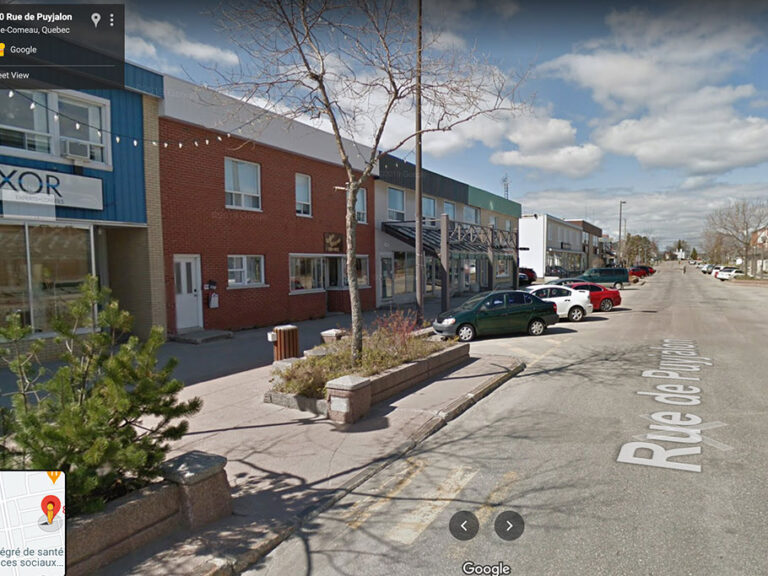
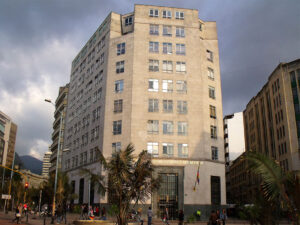
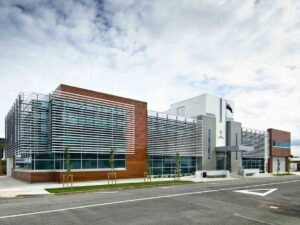
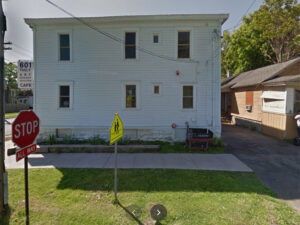
The building is located on one of Baie-Comeau’s commercial arteries, rue De Puyjalon. The two-storey building is made of a combination of blue siding, yellow bricks, stone masonry, and grey metal skeletal awnings vaguely reminiscent of Baroque flying buttresses. The ÉquiJustice offices are located on the ground floor of the building, besides the offices of a land surveyor and Axor consulting.
Restorative justice rooms:
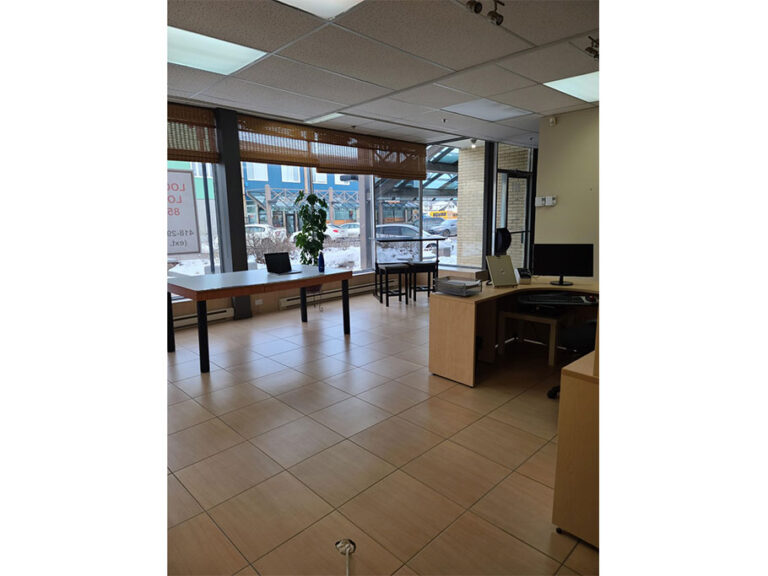
The reception displays large commercial windows facing the street. For added privacy, the windows are equipped with roll-down bamboo shades. The interior yellow walls blend with the colour of the brick outside. The floor has been finished with 12”x12” square tiles in a peanut beige colour. The space is furnished with standard office furniture, including a reception desk, credenza, table, and bistro table with stools. The suspended acoustic tiles ceiling features integrated linear flat panel lighting.
The offices are nondescript in terms of their design. In both spaces a desk faces the door and is surrounded by an upholstered office chair, a bookcase, and a storage cabinet. There are no pictures or art on the walls, which are painted a dull greyish colour. The floors are laid with a faux-wood laminate flooring. Only one of the two offices includes a guest chair, opposite the desk, which suggests that these rooms are not used for meetings or restorative justice practices.
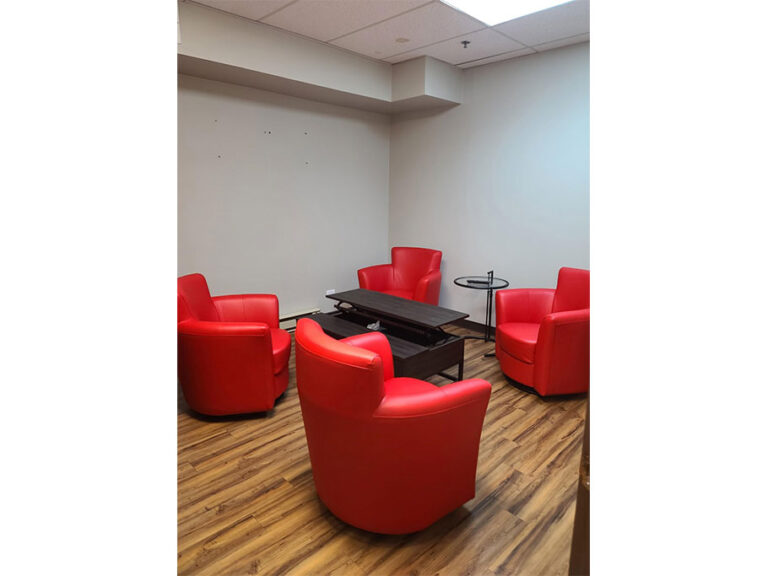
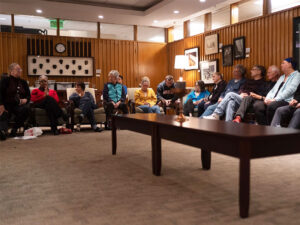
The program rooms are where the restorative justice sessions are facilitated. In these two rooms, devoid of natural light, the floors are also covered with laminate flooring and the ceiling is outfitted with suspended acoustic tiles and flat panel lighting. Both rooms also feature the same greyish colour as the offices. What differentiates the office and the program rooms is their furnishings as one is occupied by a large conference table and upholstered chairs and the other is furnished with four red vinyl club chairs laid around a convertible coffee table.
Analytical description of space:
1. Restorative justice programs (GAMP and YCJA):
ÉquiJustice believes that offenders have the potential to repair harm they have caused and rebuild the damaged relationships between members of a community. They are mandated under the laws of the Youth Criminal Justice Act (YCJA), the General Alternative Measures Program (GAMP) for adults, and the application of the Québec Code of Penal Procedure.
By promoting equitable justice, network members listen, accompany and support the parties involved in the reparation process. The restorative justice process gives everyone the opportunity to participate in an open and respectful environment.
General Alternative Measures Program (GAMP) for adults:
- The General Alternative Measures Program is a diversion program, focused on repairing harm caused to victims and the community. This restorative justice program aims to be fair, in the sense that it considers the needs of both victims and accused. ÉquiJustice supervises these measures and supports them in the implementation of the program’s objectives: victim involvement, repairing wrongdoing, and self-awareness development.
Youth Criminal Justice Act (YCJA):
- ÉquiJustice accompanies young offenders, their parents, victims, and their parents (if they are young), in the chosen reparation process. There are three restorative measures: reparation to the victim, reparation to the community, and self-awareness development.
2. Citizen mediation:
Citizen mediation is a service aimed at promoting conflict resolution within the community, based on communication and dialogue. It stems from the initiative of members of the ÉquiJustice network. Free and confidential, this service is accessible to all. Citizens wishing to share in an approach supervised by professionals can contact a citizen mediator.
With the exception of family law situations (separation, divorce or childcare), the following cases can be dealt with:
- Conflicts with neighbours
- Interpersonal conflicts
- Conflicts between multiple citizens and organizations (private or public)
- Conflicts within the workplace
Mediators foster respect and verbal exchanges between the individuals involved, with the aim of enabling people to resume an active role in the resolution of their conflict.