INTERVIEWS
Tarek Maassarani has been a restorative justice facilitator for over ten years. He has extensive experience working in different environments such as schools, universities, community organizations, and the traditional justice system with youth and adults. In addition, he has worked with the Office of the Attorney General for the District of Columbia (USA), and has organized damage repair and restorative circles in different countries, including Sri Lanka.
During our conversation, Maassarani talks about diverse approaches to restorative circles, as well as the spaces used for this purpose, including rooms in schools and organizations, virtual encounters, and meeting spaces in prisons. According to Maassarani, it is important to allow participants to choose the space for their restorative encounter, as long as this decision is not limited by conditions such as the restriction of freedom of one of the participants. Using several examples, he also tells us about the importance of the relationship between nature and restorative spaces, of using a central piece with a metaphorical meaning, and how maintaining a comfortable environment by controlling physical and symbolic conditions of the space can allow participants to feel safe at all times. Among other aspects, he emphasizes the importance of the use of natural light, having control over the interior temperature, and avoiding formal/institutional spaces.
In addition, he describes how an ideal, safe, and welcoming space for restorative practices would look like. Its features would include flexibility of the space, ensuring a condition of privacy at all times, constant access from the interior to the exterior, a direct relationship with nature, having control of both natural and artificial lighting, and access to diverse furniture and central pieces. As well as a circular or square room shape that will contribute to avoid any oval configuration. All features that could allow a personalization of the space, moving away from any generic conditions.
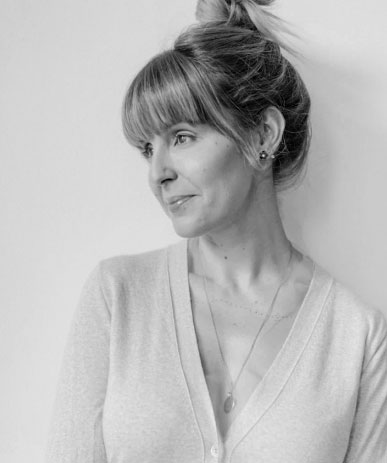
is an author, speaker, columnist, and podcaster in the fields of architecture and decorative arts. She is completing her MA in Art History at Concordia University, Montréal, and holds a Bachelor of Commerce with a major in Marketing from John Molson School of Business. She studied Industrial Psychology in Los Angeles, California. Sicotte is the author of two published books on design (2015, 2018) published by Les Éditions Cardinal.
is a Colombian PhD candidate in the Department of Art History at Concordia University. She has a background in architectural design and community activism and holds a master’s degree in Building and Urban Design from the Bartlett School of Architecture in London, England. Her interests focus on socially-engaged art, social movements, collaborative activism in post-conflict scenarios, collectively-produced art, and art produced in relation to the built environment.
is a PhD candidate in Humanities at Concordia University. His research focuses on spatial agency, social aesthetics, youth narratives, and graphic representations of urban memory. He has published on the relationship between children, play, and public space in Cartagena, Colombia. He has also worked as an editor on literary projects, including Territorio Fértil, which received the María Nelly Murillo Hinestroza award for Afro-Colombian literature.
is Associate Professor and Canada Research Chair in Architectures of Spatial Justice (Tier 2) at the Peter Guo-hua Fu School of Architecture at McGill University, Montréal, Québec, Canada. Her research interests include low-income housing and participatory design, civil protest and urban design, and campus landscapes and race. Her publications include the co-edited book, Orienting Istanbul (2010) and solo-authored book, Istanbul Open City (2018).
is an artist and a professor of Art History at Concordia University. Her work focuses on women and the history of the built environment, urban landscapes, research-creation, and oral history. She has published on the spatial history of the suffrage movement, public art, gardens, and the politics of urban change. In addition to her research on the spaces of restorative and transitional justice, she is leading an oral history project on the urban memories of diverse Montrealers.
is Associate Professor in the Department of Theatre at Concordia University, Montreal (Quebec, Canada). He is also the second co-director of Concordia’s Centre for Oral History and Digital Storytelling. His latest publications explore listening in the context of post-conflict performances of memory. For instance, see ‘Facilitating voicing and listening in the context of post-conflict performances of memory. The Colombian scenario.’ In: De Nardi, S., Orange, H., et al. Routledge Handbook of Memoryscapes. Routledge: London. (2019), and his article ‘Not being able to speak is torture: performing listening to painful narratives’. International Journal of Transitional Justice, Special Issue Creative Approaches to Transitional Justice: Contributions of Arts and Culture. (March, 2020)